You sign up for hosting at $2.99 a month. A year or four later an invoice arrives for $10.99 a month, or $17.99, and nothing about the plan has changed. This is not a mistake and it is not hidden, but it is easy to miss. This guide explains how hosting pricing works, shows the maths for a realistic budget, and lists the hosts whose renewals hurt least.
Intro price vs renewal price
Almost every shared hosting plan has two prices:
The intro price is a promotional rate for new customers. It applies to the first billing term only, and you usually have to prepay that whole term (12, 36 or 48 months) to get it.
The renewal price is the regular rate. It applies from the second term onwards, and it is normally two to six times the intro price.
A third number ties them together: the 3-year true cost. It is what you pay for 36 months of hosting once both prices are taken into account. We show it on every plan on HostPrices because it is the only figure that lets you compare a 12-month deal with a 48-month deal fairly.
The maths, with a real example
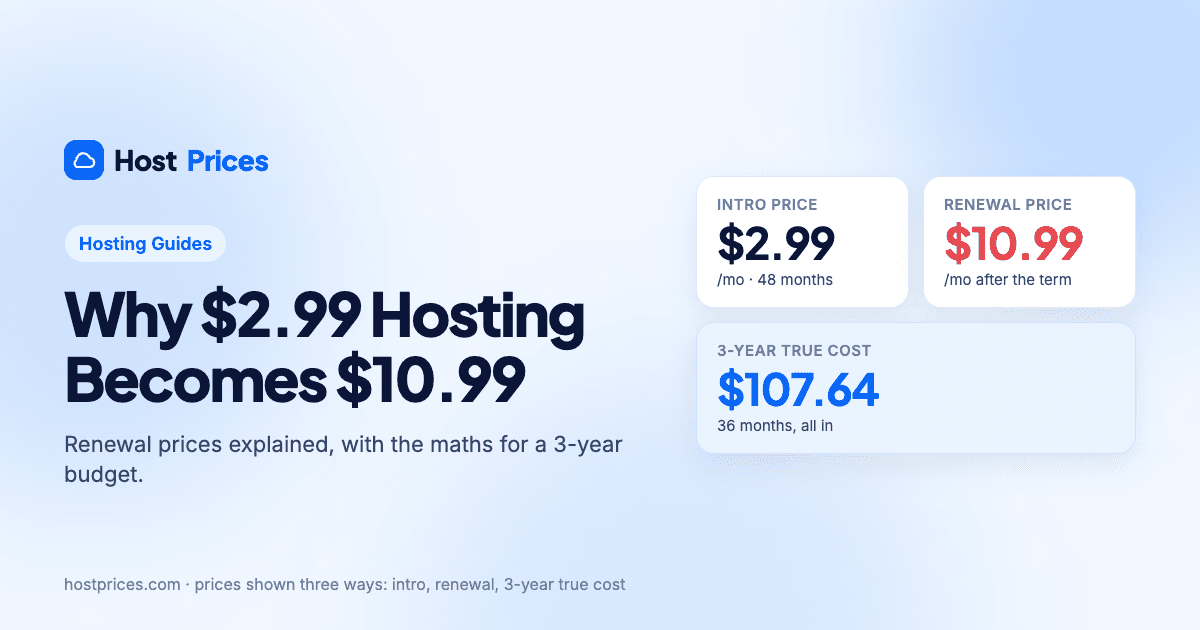
Hostinger's Premium plan is $2.99 a month on a 48-month term and renews at $10.99 a month. Because the intro term is longer than three years, the whole 36-month window is billed at the intro rate:
36 months × $2.99 = $107.64
Now compare a plan with the same headline price but a shorter term:
SiteGround's StartUp is also $2.99 a month, but only for 12 months, and it renews at $17.99 a month:
12 months × $2.99 = $35.88
24 months × $17.99 = $431.76
3-year true cost = $467.64
Same headline, a difference of $360 over three years. That is the renewal trap: the first price gets the attention, the second price gets the money.
Why hosts price this way
Hosting is a subscription business with a high cost of acquiring each customer (advertising, affiliate commissions, free domains). A low intro price gets you through the door; the renewal price is where the provider earns the money back. Most customers do not switch hosts over a price rise because migrating a site takes work, and the hosts know it.
None of this is dishonest as long as the renewal price is disclosed, and it always is, somewhere on the pricing or checkout page. The problem is that most comparison sites only quote the intro price, so people budget for the wrong number.
Which hosts keep renewals low?
| Plan | Intro · renewal | 3-year true cost | Includes | Action |
|---|---|---|---|---|
 NamecheapStellar | $2.28/morenews $4.66/mo · $139.20 over 3 yrs | $139.20 |
| View plan |
 BluehostStarter | $3.99/morenews $9.99/mo · $143.64 over 3 yrs | $143.64 |
| View plan |
 HostingerPremium | $2.99/morenews $10.99/mo · $107.64 over 3 yrs | $107.64Lowest |
| View plan |
 SiteGroundStartUp | $2.99/morenews $17.99/mo · $467.64 over 3 yrs | $467.64 |
| View plan |
3-year true cost = intro term at the intro price, then renewals at the renewal price, for 36 months. Prices exclude tax.
Two strategies keep the three-year cost down:
A long intro term. Hostinger's 48-month and Bluehost's 36-month terms cover the whole three years at the intro rate. You pay more up front but never see the renewal price inside the window.
A low renewal price. Namecheap's Stellar plan renews at $4.66 a month, so even on a 12-month term the three-year total stays under $140. This is the better option if you cannot or do not want to prepay years in advance.
Six ways to avoid the renewal trap
Read the term under the price. "$2.99/mo" nearly always means "when you pay for 48 months".
Find the renewal price before you buy. If it is not on the pricing page it will be on the checkout page or in the terms.
Budget on the 3-year true cost, not the first invoice.
Match the term to your plans. Prepay 36 or 48 months only if the site will still be running then.
Set a reminder for one month before the term ends. Hosts send renewal notices, but they are easy to miss.
Be ready to switch. Most hosts offer free migration for new customers, so moving to a new intro price is a real option when your renewal arrives.